


Step into a traditional incense workshop in Lhasa offers travelers a rare opportunity to witness a living expression of Tibetan cultural and spiritual heritage. At an elevation of approximately 3,600 meters, the ancient capital of Tibet is infused with the warm, earthy aromas of sacred Himalayan herbs—juniper, sandalwood, saffron, rhododendron leaves, and medicinal roots traditionally gathered from high-altitude regions.
The Great Tibetan Lakes Expedition: 24 Days Across the Roof of the World
Posted on Mon July 27, 2026.
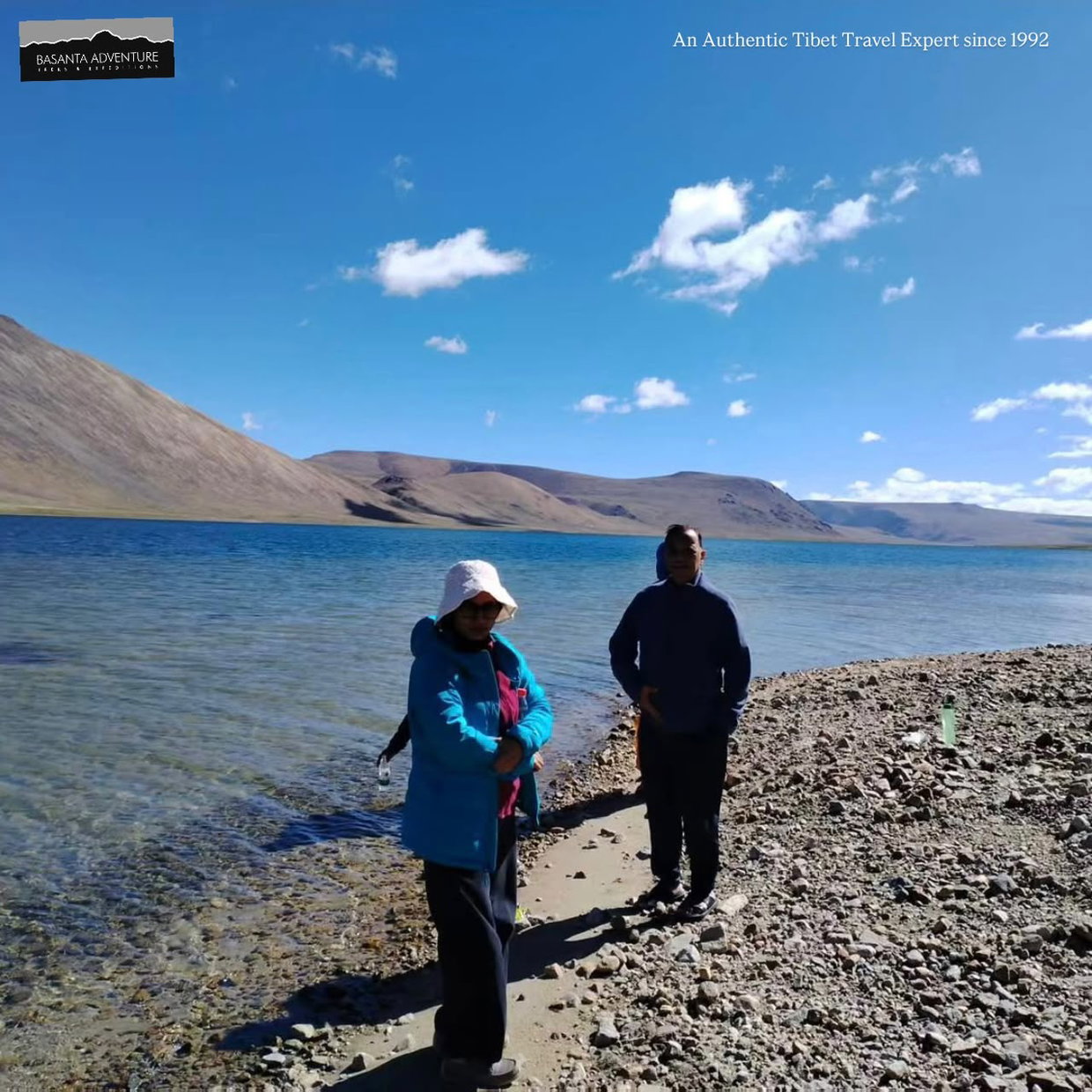 The Great Tibetan Lakes Expedition is an extraordinary 24-day odyssey across the world's highest plateau, unveiling Tibet's spectacular landscapes, pristine sacred lakes that give birth to many of Asia's great rivers, ancient monasteries and temples, remarkable archaeological sites, and a living cultural heritage shaped by centuries of profound spiritual wisdom.
Organized by Basanta Adventure, yet another exclusive expedition currently underway is designed for a select team of five experienced explorers—adventurers with a passion for discovery, a spirit of exploration, and a deep appreciation for Tibet's profound spiritual and cultural traditions.
24-day, 4,500-kilometer overland journey across the Tibetan Plateau. It links six sacred high-altitude lakes, the source regions of four of Asia's great rivers, the 52 km Mount Kailash Kora, the ruins of the Guge Kingdom, the wildlife of the Changthang Plateau, Nam Tso Lake, Everest Base Camp on the north face, and the monasteries of Lhasa. The highest point is 5,630 meters at Dolma La Pass. The season runs May through October.
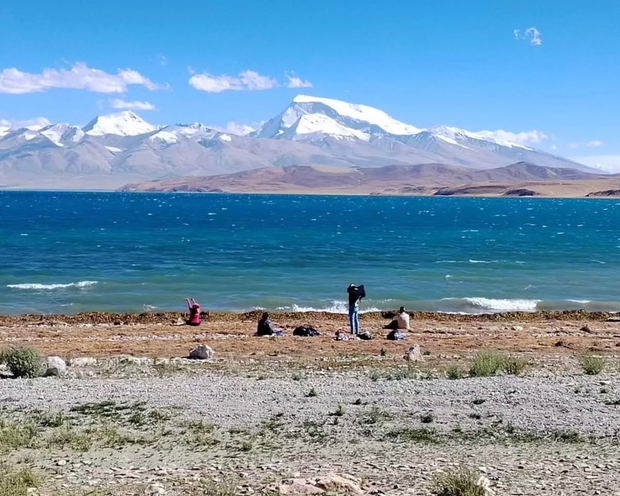
Beyond Saga, the road ascends past 4,500 meters, introducing a striking transition in the landscape. A vibrant band of turquoise emerges along the horizon, contrasting so sharply against the arid plateau that first-time travelers frequently mistake the sight for an optical illusion. This phenomenon represents one of the highest lakes on Earth, a distinct geographic feature that repeats six times throughout the course of this expedition.
This itinerary unifies these destinations into a single, cohesive circuit. Over 24 days, the journey follows a deliberately sequenced arc, maintaining a pace optimized for physiological acclimatization and immersive engagement. Only a select few itineraries globally attempt this complete overland circuit, positioning this expedition as a premier regional offering.
The Great Tibetan Lakes Expedition: At a Glance
• Duration: 24 days
• Distance: Approximately 4,500 to 5,000 kilometers overland
• Peak Elevation: 5,630 meters (18,471 feet) at Dolma La Pass during the Mount Kailash Kora
• Operational Season: May through October
• Geographic Coverage: Expedition route covers complete circuit starting from Kyirong port of entry towards western Tibet of Saga, Kailash area, Kingdom of Guge, Senge Kabab, Renduo Township, Nima (Changthang Plateau), Damsung, Lhasa, Shigatse, Everest Base Camp, Kyirong.
 Expedition Classification:
Premium overland expedition integrating the geographical beauty of pristine landscapes, cultural heritage, wildlife observation, photography, and Spiritual pilgrimage sites.
Comparative Overview: The Expedition Difference
Premium overland expedition integrating the geographical beauty of pristine landscapes, cultural heritage, wildlife observation, photography, and Spiritual pilgrimage sites.
To understand deep historical, geographical, spiritual, and cultural significance of Tibet.
• Duration: Standard itineraries are limited and good for an introductory highlight of Tibet. This expedition spans 24 days, allowing for deep regional immersion.
• Geographic Scope: Standard tours restrict travel to Lhasa and Central Tibet. This expedition encompasses the entire plateau, executing a complete circuit from Lhasa to Ngari and back.
• Sacred Lakes: This route features six distinct high-altitude lakes, including detailed excursions to Brahmaputra Lake (Manasarovar Lake), 4,600, Gyuma Tso (5,360m), Nangla Tso(4750m), Nam Tso (4700m), Peiku Tso (4591m), and Yamdrok Tso (4445m).
• Mountain Exploration: Standard travel provides a distant viewpoint of Mount Everest. This itinerary includes direct access to Everest Base Camp alongside the complete 52-kilometer trekking circuit of the Mount Kailash Kora.
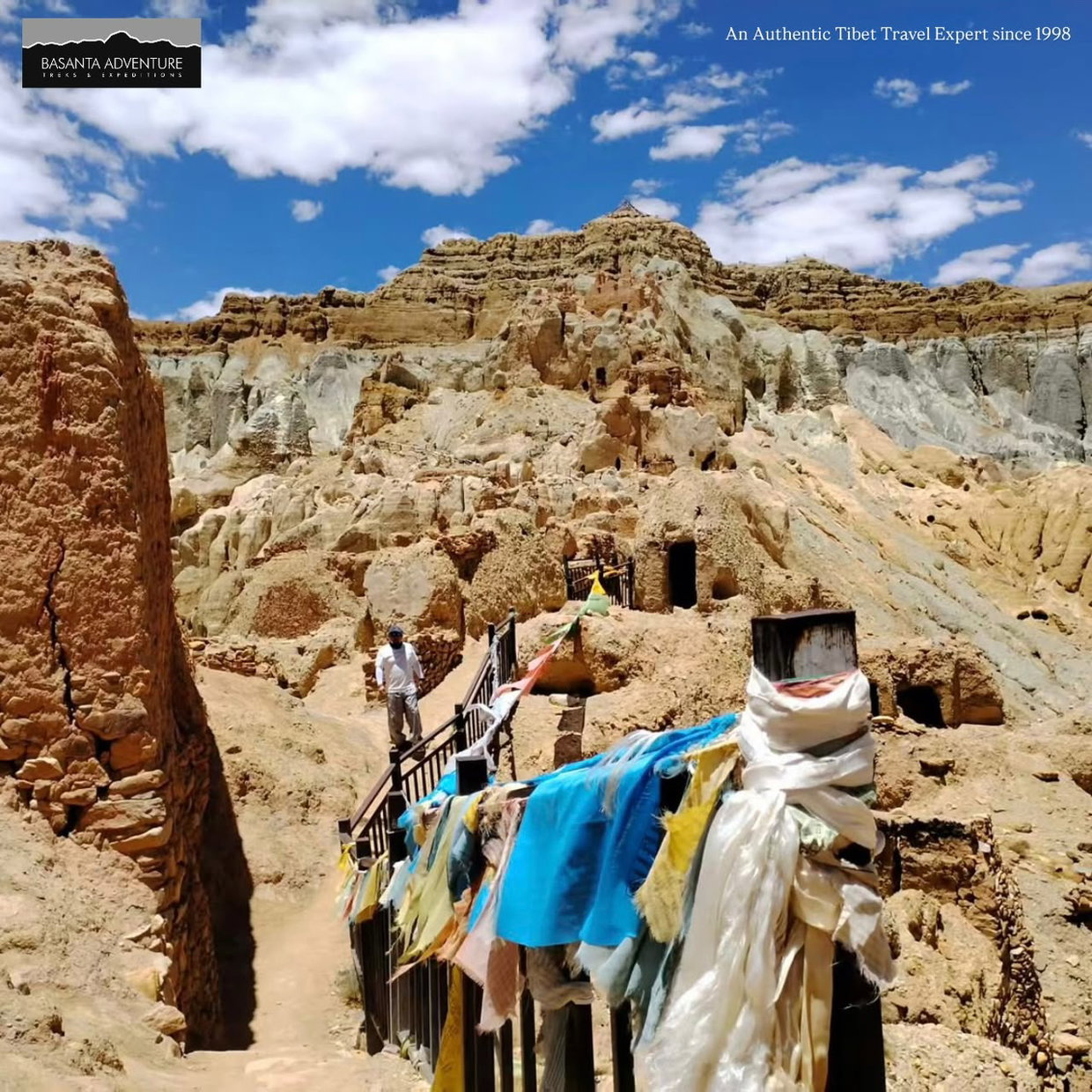
• Historical Archaeology: While standard itineraries omit ancient historical sites, this journey dedicates substantial time to the ruins of the Guge Kingdom, Tholing Monastery, Tirthapuri, and the Garuda Valley.
• Wildlife Conservation Corridors: Standard tours offer incidental roadside sightings. This route features a dedicated transit of the remote Changthang Plateau, a critical habitat for the kiang (wild ass), Tibetan antelope, wild yak, and black-necked crane.
• Hydrological Significance: Standard itineraries bypass major river systems. This expedition specifically routes through the headwaters of four of Asia’s primary rivers: the Indus, Sutlej, Karnali, and Brahmaputra.
• Peak Elevation: Standard travel reaches vehicular passes at approximately 5,200 meters. This expedition achieves a maximum pedestrian elevation of 5,630 meters at the Dolma La Pass.
Where a standard itinerary offers an introductory glimpse into Tibet, this 24-day expedition provides an exhaustive, end-to-end exploration of the entire region.
 Why Travel Now
- The Tibetan Highlands, particularly the remote Ngari region of western Tibet, have long remained one of the world's last great frontiers. However, the growing popularity of pilgrimage tourism has accelerated infrastructure development along major pilgrimage routes. While improved accessibility benefits travelers, it is also gradually transforming the region, diminishing some of its original solitude, pristine landscapes, and deeply spiritual atmosphere.
- The opportunity to experience Tibet in its most authentic form still exists—but the window is narrowing. Many remote valleys, sacred lakes, archaeological sites, and ancient pilgrimage routes remain largely untouched, offering extraordinary experiences for explorers seeking to venture beyond the conventional tourist trail.
- For those who have always dreamed of discovering the pristine Tibetan Highlands, the time is now. Some of the world's last truly unspoiled landscapes are changing, and today's expedition offers a rare chance to experience their timeless beauty, cultural authenticity, and profound spiritual legacy before they are transformed forever.
Basant Bajracharya, Tibet Expert
Further Reading

Traditional Tibetan Incense Making Experience in Lhasa
Fri December 19, 2025
Read This Article

Share This Post